By Steven Reid · Last updated on September 5th, 2026
A boiler not firing up usually means it has not received a demand for heating or hot water, or a fault has interrupted the ignition sequence.
Sometimes the cause is simple, such as low pressure, a thermostat setting or a loss of power. Other times, the boiler may have locked out because of a blocked condensate pipe, ignition problem or failed internal component.
I have been repairing boilers full-time for over 15 years. In this guide, I’ll explain what different symptoms mean, what you can safely check and when repairing or replacing the boiler makes more sense.
Why is my boiler not firing up?
The boiler could be working correctly but not receiving a signal from the thermostat or programmer. Check whether its display is on and whether anything happens when you turn the heating on or run a hot tap.
If the boiler attempts to start but stops, possible causes include low pressure, no gas, a blocked condensate pipe or an ignition fault. A fault code on the display can help identify which part of the process has failed.
No lights or sounds usually point towards an electrical supply problem. Repeated clicking followed by a lockout suggests the boiler is attempting to ignite but cannot complete the process.
What can you safely check yourself?
Before calling an engineer, check:
- The boiler display has power
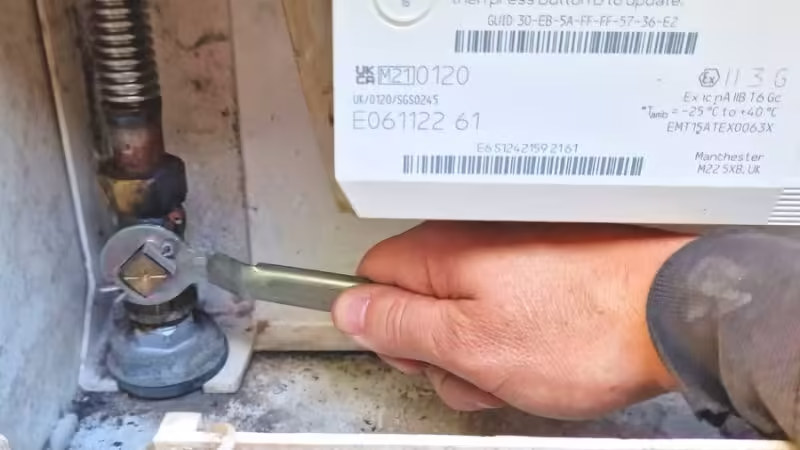
- The gas supply has not been turned off
- A prepayment meter still has credit
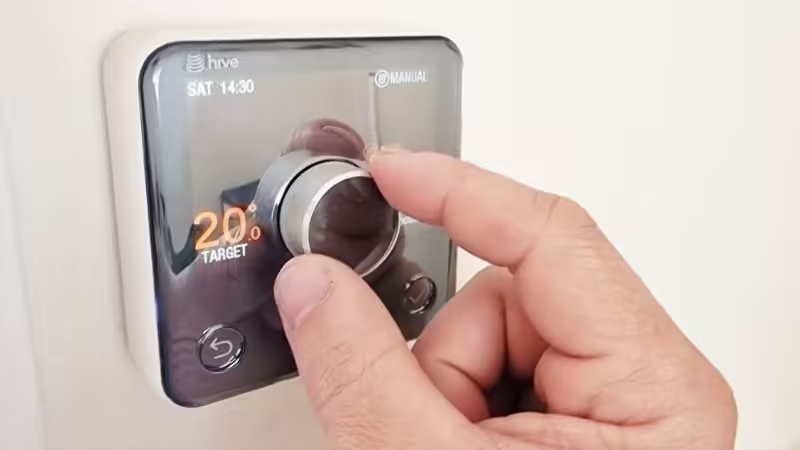
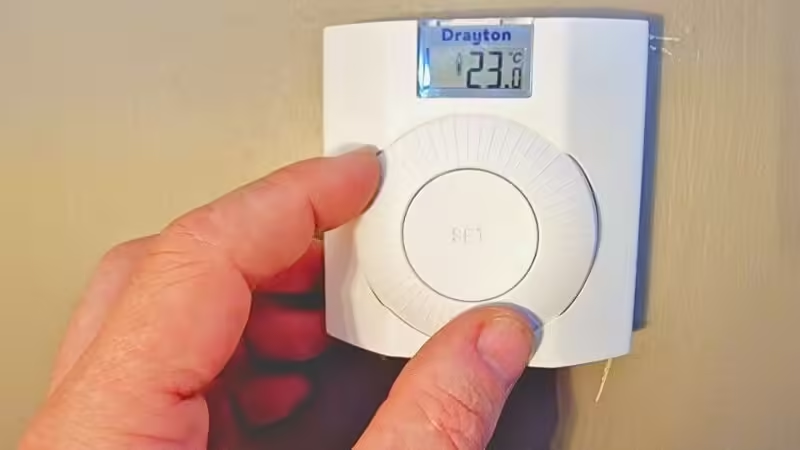
- The thermostat is set above the current room temperature
- Wireless thermostat batteries are working
- The programmer is set correctly
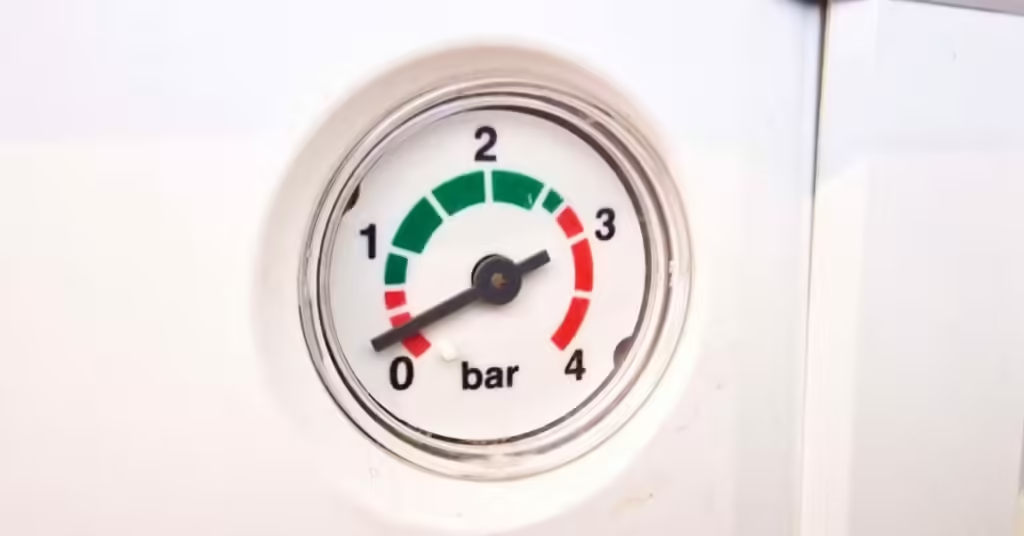
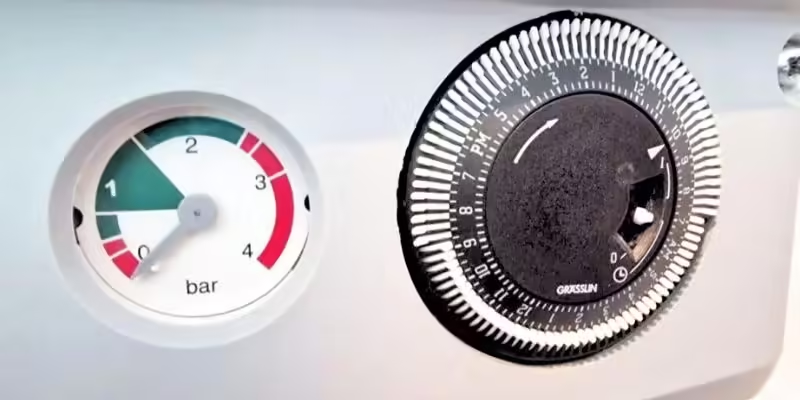
- The boiler pressure is usually between 1 and 1.5 bar when cold
- The display is showing a fault code
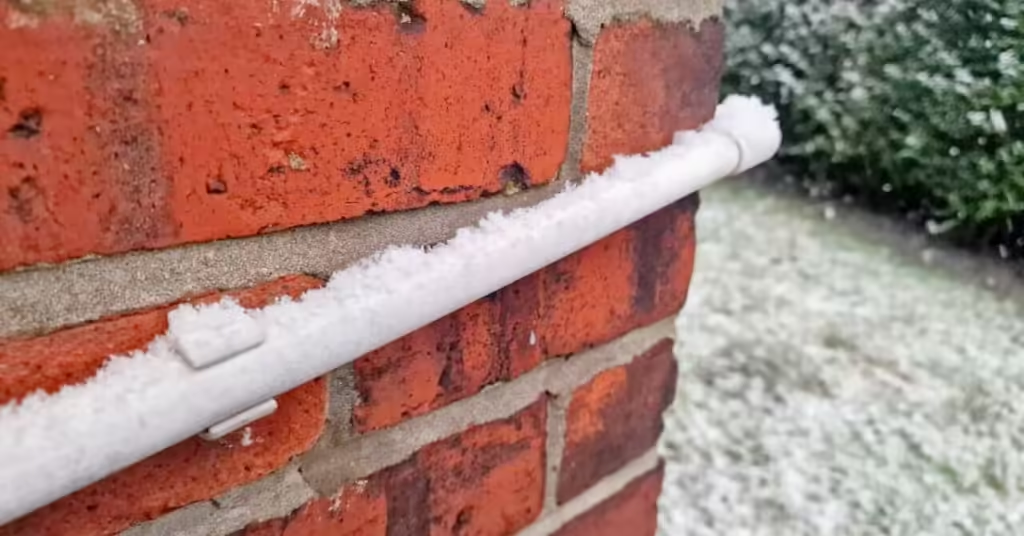
- The external condensate pipe is not frozen
If there is no power to the boiler, make sure the switched fused spur next to it is turned on and check whether its fuse has blown. Boiler spurs normally use a 3-amp fuse, but confirm this in the manufacturer’s instructions.
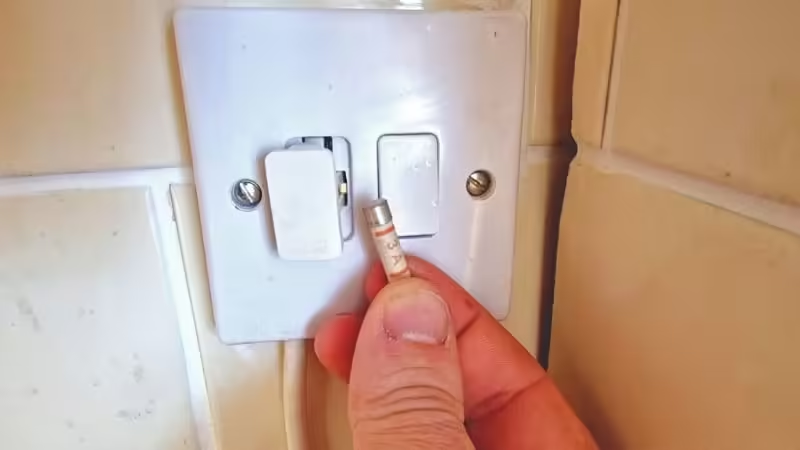
If a replacement fuse blows again, there is likely an electrical fault that needs investigating.
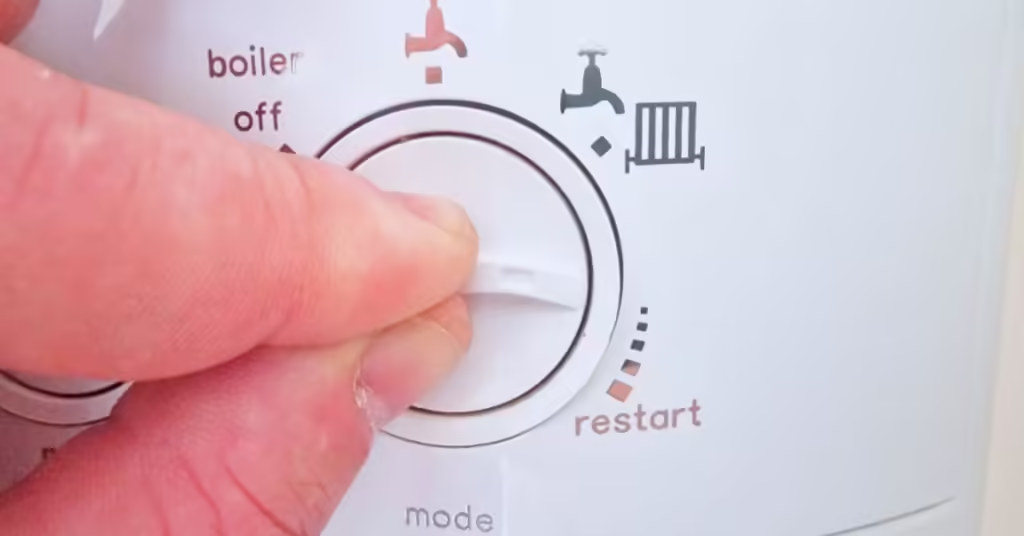
If the pressure is below 1 bar, follow my guide to repressurising a boiler. You can also reset the boiler once by following the manufacturer’s instructions.
If these basic checks do not get it working, the fault needs to be properly diagnosed.
Is the problem affecting heating, hot water or both?
Identifying exactly what has stopped working can rule out several possible causes.
No heating or hot water
If neither is working, start with the boiler’s power supply, gas supply and pressure. A boiler fault or lockout is more likely because the appliance is not operating for either demand.
Check the display for a fault code and listen to what happens when the boiler attempts to start. No response, repeated clicking and starting before immediately stopping can all indicate different problems.
Heating works but there is no hot water
The boiler can fire for the heating, so you can usually rule out a complete loss of power, gas or system pressure.
On a combi boiler, possible causes include:
- A stuck diverter valve
- A blocked plate heat exchanger
- A faulty flow sensor or microswitch
- A faulty hot-water temperature sensor
My separate guide explains the causes of having no hot water from the boiler while the heating still works in more detail.
Hot water works but there is no heating
Check the thermostat, batteries and programmer first. If these are working, the problem could involve a heating sensor, diverter valve, zone valve or wiring fault.
When only one radiator remains cold, the boiler is probably not the cause. That radiator may need bleeding or balancing, or it could have a stuck valve.
Why is the boiler clicking but not igniting?
Clicking normally means the boiler has received a demand and started its ignition sequence. You may be hearing the spark electrode attempting to light the burner or a relay operating inside the boiler.
If it does not ignite, there may be no gas reaching the burner. A damaged spark electrode, faulty ignition lead, stuck gas valve or blocked condensate pipe can produce similar symptoms.
The boiler should stop trying after several unsuccessful attempts and display a fault code. Check whether another gas appliance works and try one reset according to the manufacturer’s instructions.
Do not repeatedly reset a boiler that keeps failing to ignite. Gas valves, electrodes and other internal components must be checked by a Gas Safe registered engineer.
Why is the pilot light on but the burner will not start?
Standing pilot lights are mainly found on older boilers. Modern boilers normally use electronic ignition, creating a spark whenever heating or hot water is required.
If the pilot is alight but the main burner does not start, the boiler may not be receiving a demand from the controls. The problem could also involve the gas valve, boiler thermostat, wiring or another part of the ignition system.
Try turning the room thermostat up and checking the programmer. If you have a hot-water cylinder, a faulty motorised valve may also prevent the boiler from receiving a signal.
Do not dismantle the pilot assembly or attempt to adjust the gas valve. These checks and repairs require a Gas Safe registered engineer.
Why has the boiler locked out?
A lockout is a safety feature that shuts the boiler down when it detects a fault or cannot operate correctly. A fault code or warning light will usually appear on the display.
Common reasons include:
- Failed ignition
- Low boiler pressure
- No gas supply
- Overheating or poor circulation
- A blocked or frozen condensate pipe
- A fan, sensor or flue-related fault
- Failure to detect a stable flame
During freezing weather, a condensate blockage is particularly common. Wastewater cannot escape, so it backs up and causes the boiler to stop. My blocked boiler condensate pipe guide explains the usual signs and what to check.
The fault code should be recorded before resetting the boiler because it can help an engineer diagnose the problem. If the same code returns, the underlying fault still needs fixing.
How do you reset a boiler safely?
Resetting can clear a temporary lockout, but it will not repair a genuine fault.
Before resetting:
- Check that the boiler pressure is not too low.
- Make sure the gas and electricity supplies are on.
- Write down or photograph any fault code.
- Find the reset button or setting in the manufacturer’s instructions.
- Press or hold it for the specified amount of time.
- Wait for the boiler to complete its start-up sequence.
Some boilers use a dedicated reset button, while others require a control knob to be turned to the reset position.
Give the boiler time to restart and test the heating or hot water. If it locks out again, do not continue resetting it. Repeated lockouts normally mean a problem must be found and repaired.
When should you call a Gas Safe engineer?
Call an engineer when the boiler continues to lock out, displays a recurring fault code or fails to start after the basic checks have been completed.
Professional diagnosis is also needed when:
- The boiler repeatedly clicks without igniting
- The pressure continues to drop
- Water is leaking from the boiler
- You hear unusual banging, grinding or vibrating
- The boiler starts but immediately shuts down
- Heating and hot water keep cutting out
- An internal component appears to have failed
If you smell gas, turn the appliance off, open doors and windows and shut off the gas supply at the meter if you know how to do so safely. Call the National Gas Emergency Service immediately on 0800 111 999.
How can you prevent another breakdown?
Not every breakdown can be prevented, but regular maintenance can identify worn, dirty or unsafe components before they cause the boiler to stop working.
Keep the area around the boiler clear and check its pressure occasionally. If the pressure regularly drops, the cause should be found rather than continually topping it up.
A professional service should include safety and performance checks, inspection of the flue and cleaning where required. Booking an annual boiler service can also help maintain the manufacturer’s warranty on newer boilers.
Thermostat batteries should be changed when needed, and an external condensate pipe should be properly sized, insulated and protected from freezing.
When should you replace an unreliable boiler?
A single ignition fault does not normally mean the boiler needs replacing. Repair will usually make sense when the boiler is relatively new, replacement parts are available and the problem can be fixed at a reasonable cost.
Replacement becomes worth considering when the boiler:
- Is around 10 to 15 years old or more
- Breaks down repeatedly
- Needs an expensive PCB, gas valve or heat exchanger
- Has extensive corrosion or several developing faults
- Uses obsolete parts that are difficult to obtain
- Has become unreliable despite regular maintenance
Compare the repair cost with the boiler’s age and condition and likely remaining lifespan.
A straightforward repair on an otherwise reliable boiler is usually worthwhile, whereas repeatedly spending money on an old appliance may not be.
If replacement appears to be the better option, get quotes from Gas Safe registered installers and compare the warranty, controls, system cleaning and aftercare included, not only the price.
Readers in the local area can see my boiler installation service in Newcastle and North Tyneside for current prices and everything included.
Before replacing the boiler, have the fault properly diagnosed. A boiler that will not fire up may still need only a straightforward and affordable repair.
Is your boiler still not firing up? Leave the make, model, fault code and exactly what happens when it tries to start in the comments below, and I’ll help you narrow down the likely cause.