
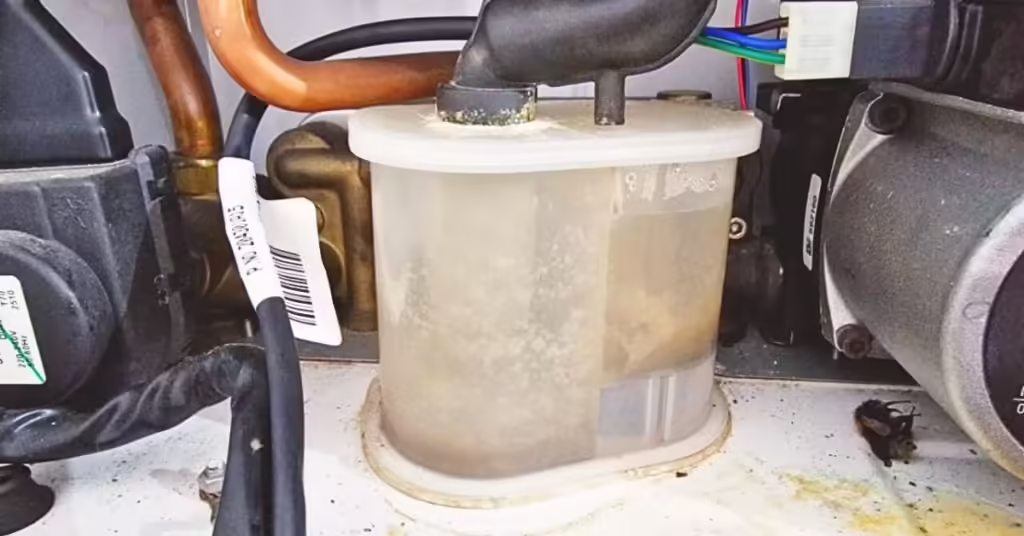
By Steven Reid · Last updated on August 23rd, 2026 · 5 Comments
Ideal boiler condensate traps can get very dirty and eventually blocked if they are not cleaned out. They get full of all sorts of weird gunk and sometimes bees and other insects that get in through the flue terminal from outside. I have been cleaning and servicing boilers for over 15 years, and I have cleaned my fair share of condensate traps.
Video guide
Step-by-step guide
If you have your boiler serviced regularly, the condensate trap should be cleaned when needed as part of the service. If not, cleaning it every year or so can help stop it from getting blocked and causing the boiler to lock out.
Cleaning the condensate trap is just one of several maintenance checks, so you can also see what’s included as part of a boiler service in my full guide.
To clean a condensate trap, you need to remove it from the boiler, run it under a tap and keep shaking it while filling it with cold water and emptying it.
1. Remove the trap
- Turn the boiler off and isolate the electric supply at the spur if possible
- Loosen the two screws on the bottom corners of the boiler
- Unclip the casing from underneath and remove the casing
- Unclip the control panel and pull forward
- Remove the black rubber tube on top of the condensate trap
- Twist the trap anti-clockwise, then lift and remove it from the boiler
If you have an older Ideal Logic boiler, you might have a screw-on cap under the boiler keeping the trap secured to the boiler.
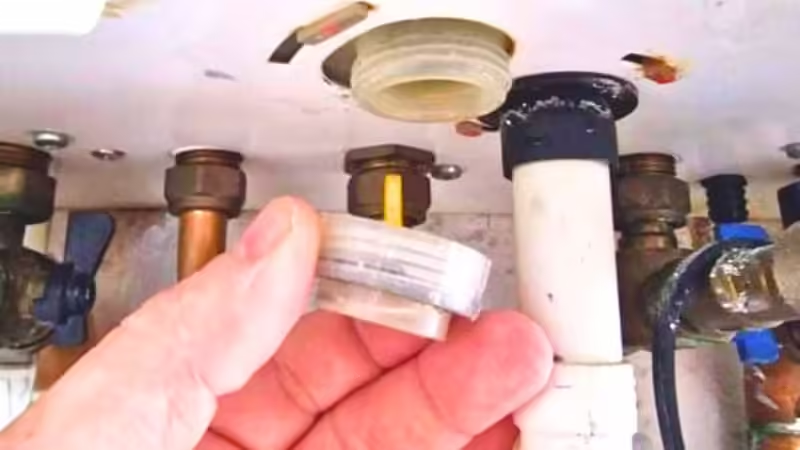
This cap will need to be unscrewed anti-clockwise and removed to remove the trap. Make sure to have a bucket underneath to catch the condensate water.
2. Clean and refit the trap
- Pour out the dirty condensate wastewater from the trap into a sink and fill it with fresh water
- Shake the trap vigorously and empty it
- Repeat until all the gunk inside the trap is removed
- Fill with water and hold straight above the sink; let the water come out of the bottom
- Fit over the rubber seal and make sure it sits in the seal properly and the other bit sits in the slot
- Twist the trap clockwise to lock it in place
- Refit the black rubber tube with the double pipe end sitting in the trap
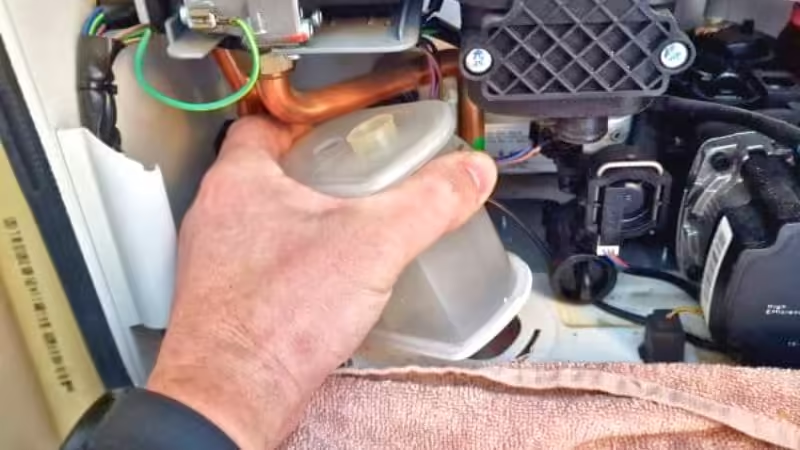
Condensate Trap full of water
A condensate trap should always be full of condensate wastewater. This is completely normal. When it fills with water from the flue, it will partially empty out of the bottom and down the condensate pipe to the drain. Having the condensate trap full of water stops the poisonous flue fumes from coming through the trap.
This is what traps are made for. Just like traps on sinks are always full of water to stop smells and creepy crawlies coming through. If your condensate trap is not emptying, it must be blocked.
Boiler Condensate Trap blocked
A blocked condensate trap prevents wastewater from draining out of the boiler. Water can back up inside the boiler and cause it to lock out, leaving you without heating or hot water.
Cleaning the trap should restore the flow. If it contains solid debris that cannot be removed properly, the trap may need replacing.
If the trap is clean but water still does not drain away, the blockage is probably further along the condensate pipe or inside the waste pipe it connects to.
During freezing weather, check any external pipework for ice before resetting the boiler. Follow my guide on how to thaw a frozen boiler condensate pipe if you suspect it has frozen.
Ideal boiler guides
Summary
Cleaning an Ideal Logic condensate trap is easy, but it is recommended to get your boiler serviced every year, and the trap will be cleaned during the service.
If you're just starting as a heating engineer then this will be one of the easiest jobs to learn and very common as most new build houses fit Ideal logic boilers.
Feel free to ask any questions in the comments below, and I’ll do my best to help. If you found this post helpful, please consider sharing it.
Condensate trap cleaning FAQs
Where is the condensate trap on my Ideal boiler?
The condensate trap on an Ideal boiler is inside and on the very bottom of the boiler. You must remove the boiler casing and pull down the control to see and access the condensate trap.
How do you stop a condensate pipe from freezing?
The most reliable solution is to connect the condensate pipe to an internal waste pipe. If an external run cannot be avoided, it should be correctly sized, kept short, given a continuous fall and covered with suitable weatherproof insulation.
Trace heating can provide additional protection when a pipe is exposed or has frozen repeatedly. See my complete guide on how to stop a condensate pipe freezing for all the available options.
What happens if the condensate trap is blocked?
A blocked condensate trap prevents wastewater from leaving the boiler. The water backs up inside, which can cause gurgling noises before the boiler locks out and stops providing heating or hot water.
The trap will need cleaning or replacing if the blockage cannot be removed. If the trap is clear but the wastewater still does not drain, there may be a blocked boiler condensate pipe or a blockage in the waste pipe it connects to.

Hi
Just followed these instructions as IDEAL boiler had been giving L2 code. Put it down to weather initially (mega cold at the mo) but, turns out boiler not been serviced for 3 years, no external condensate pipe and so the condensate trap proved to be quite gunky.
Your website and instructions were super super helpful and we have heat and hot water again thanks to your advice. Just wanted to comment so you know how helpful it was and how much I appreciate it
Hi Stuart,
You’re welcome, great to hear I helped.
Ideal condensate traps can get full of some funny old gunk, and sometimes you have to replace the trap because it’s solid. Then sometimes I can service a Logic boiler that hasn’t been opened for 5 years and the trap is crystal clear.
Good job working out the problem and getting it sorted, and thanks for the kind words, much appreciated!
Hi, Thanks for the helpful video.
The outside part of my Ideal Logic Combi boiler’s condensation pipe has been freezing every night this week.
I’ve put pipe insulation over the outside part of the pipe, but it’s still freezing, so trying to figure out what I can do to improve this.
The fitters have put a U bend in the condensate pipe 2 feet below the boiler, (which is in an unheated garage). I feel that defeats the purpose of a siphonic trap within the boiler which as I understand it, functions as a U-bend already, but also keeps the condensate warm, then dumps it out so its less likely to freeze than a gradual trickle.
Is there any good reason why I shouldn’t remove the U-bend and put a straight pipe up to the condensate trap?
Thanks,
Iain
Hi Ian,
That works as a secondary trap, a backup in case the boiler trap fails. Whenever a condensate pipe is run to a waste pipe in the house, it should be fitted after the trap so that trap will stop any flue fumes from coming into the house if the boiler trap fails.
Hi Ian, so our Ideal boiler was showing L2 code. Called an engineer out who cleaned the trap just like you described above and started working. After a few hours it stopped again showing the L2 code. Checked th condensate pipe and it seems fine, no leaks or cracks. Also poured hot water outisde where it comes out from and seems fine. Any advice?