
By Steven Reid · Last updated on September 4th, 2026 · 14 Comments
This post contains affiliate links. As an Amazon Associate I earn from qualifying purchases, at no extra cost to you.
Are you sick of your boiler losing pressure and having to keep repressurising it? Recharging the expansion vessel might be the solution you need to get it fixed properly. I have been repairing and servicing boilers for over a decade and recharging the expansion vessel is a common job.
Recharging expansion vessel
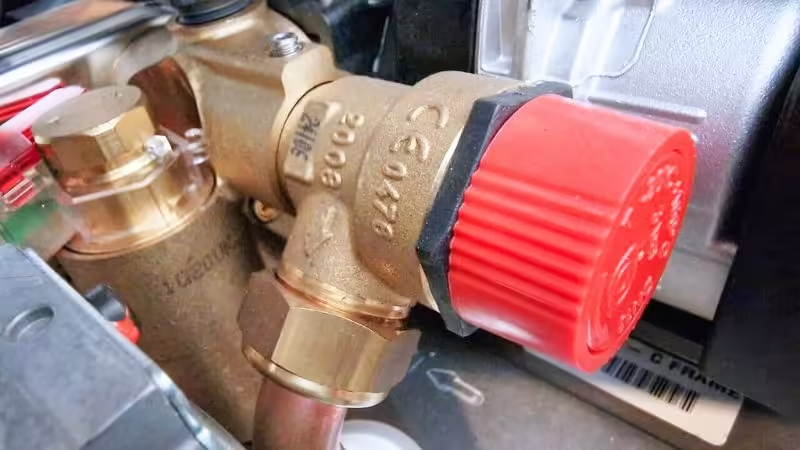
To recharge an expansion vessel you must keep pumping air into it and dropping the pressure on the boiler to get the water out. You can do this by draining the water (pressure) from a drain valve, or you can use the pressure relief valve like I do, which is much easier.
You might need to replace the pressure relief valve after it has blown the water out as sometimes they don’t close fully after being used. It’s already blown the water out many times because of this problem so using it to drain won’t change anything.
Video guide
Step-by-step guide
How I recharge expansion vessels:
- Close the flow and return valves on the boiler
- Open the pressure relief valve (PRV) until the pressure gauge is at zero
- Connect your pump to the expansion vessel
- Pump up the vessel to the correct pressure (1 bar is fine for most)
- The boiler pressure gauge will also rise, open the PRV again
- Pump up the vessel again
- Open the PRV again
- Repeat until the boiler pressure gauge stops moving
- The boiler pressure gauge should be at zero and expansion vessel pressure at 1 bar
- Remove the pump from the expansion vessel and fit the cap on the Schrader valve
- Open the flow and return valves
- Repressurise the boiler via the filling loop until the pressure gauge is around 1.5 bar
Faulty expansion vessel symptoms
Faulty expansion vessel symptoms are easy to spot:
- Expansion vessel full of water
- Boiler pressure too high or too low
Expansion vessel full of water
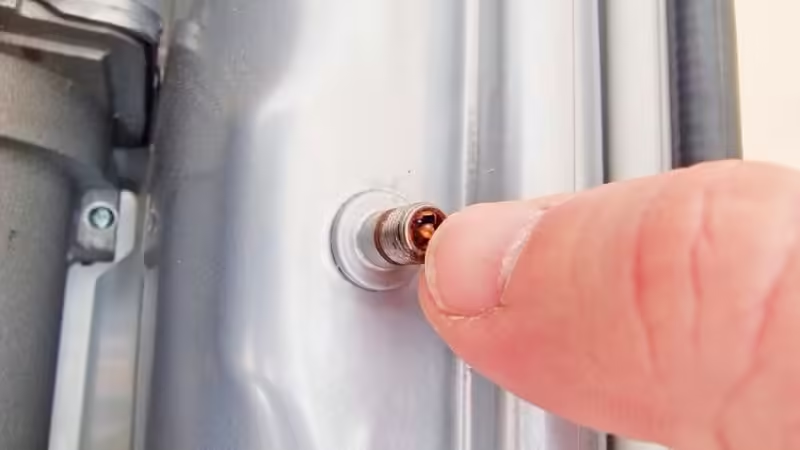
A surefire way to know if you have a faulty expansion vessel is to see if it’s full of water. You can check this easily by removing the cap on the Schrader valve (like on a car tyre) on the expansion vessel and pressing the valve in. If water comes out, the diaphragm inside is split and the vessel needs to be replaced. There should be air coming out of the valve but if no air or water is coming out then you will need to recharge the expansion vessel.
Boiler pressure too high or low
The biggest faulty expansion vessel symptom is the boiler pressure being too high which will cause the pressure relief valve safety device to let the water out and the pressure will drop to zero. This symptom tells you that the expansion vessel either needs recharging or the rubber diaphragm inside has split and the vessel needs to be replaced. You must check if the expansion vessel is full of water to find out.
How to check vessel pressure
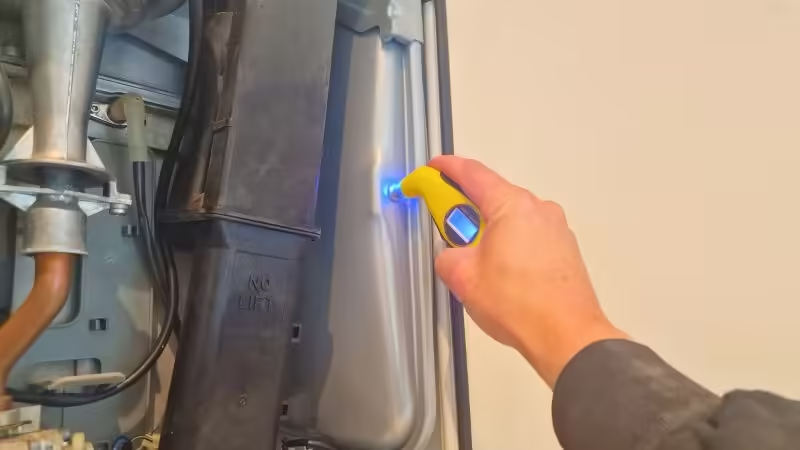
To check the expansion vessel pressure you will need a pressure gauge. You must find the vessel’s Schrader valve and connect the pressure gauge, just like on a car tyre. You will need to drop the boiler pressure to get the correct pressure of the expansion vessel, the boiler pressure gauge must be at zero to check the vessel pressure accurately.
Expansion vessel pressure setting
To find the exact expansion vessel pressure setting you should check the sticker on the vessel or in the boilers manual. If I can’t find it, I recharge the vessel pressure on a combi boiler to 1 bar (14 psi).
Expansion vessel pump
To recharge an expansion vessel you will need a pump, a pressure gauge, and possibly a Schrader valve extension hose. Any bike pump will do the job but it’s a lot easier with a better one.
Regin
When I first started recharging expansion vessels I used a Regin hand pump specifically made for expansion vessels. They do the job but with so much unnecessary work. Only electric pumps for me now.
Makita
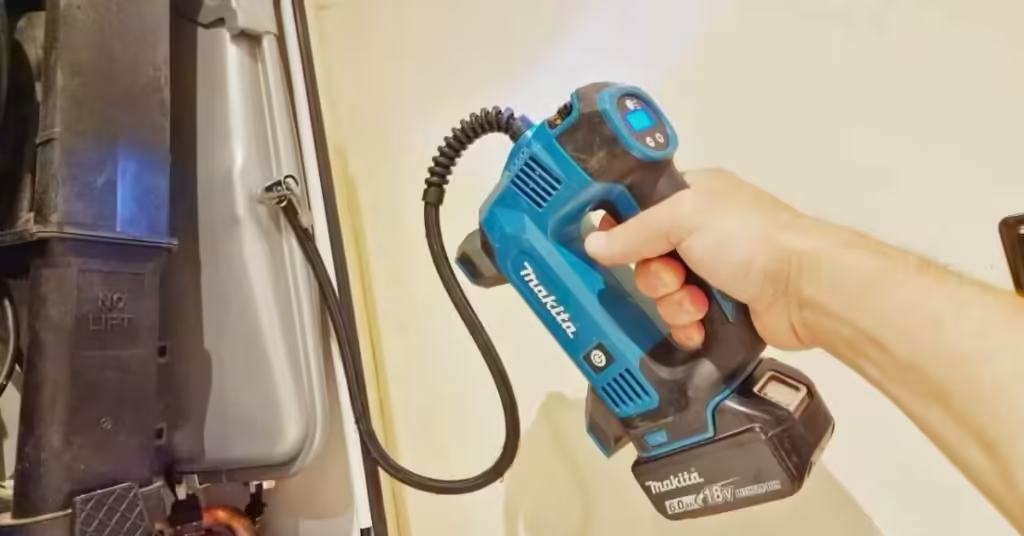
The expansion vessel pump that I use the most is my 18v Makita battery-operated pump. It blows car tyres and bike tyres up with ease but if you don’t already have Makita batteries and a charger then it can be expensive to buy everything.
Cycplus
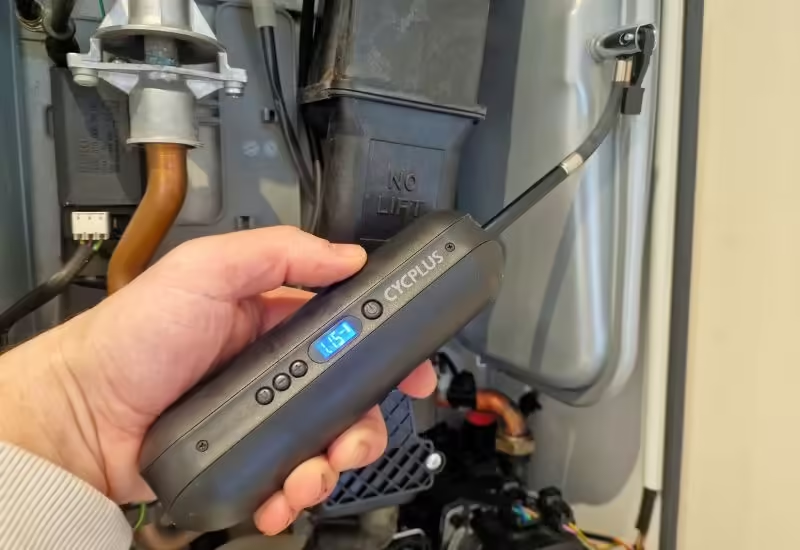
Another electric pump I love and sometimes use on expansion vessels is a Cycplus pump. It’s unbelievably small and light and can blow car and bike tyres up with ease also. I mainly use it for my mountain bike but it’s brilliant for expansion vessels. Just set the pressure you want and press the button, simple. You charge it with a micro USB cable.
Conclusion
Recharging an expansion vessel can be hard when doing it for the first time, but using a good electric pump is key. The vessel has lost all of its air and is full of water so the rubber diaphragm inside is not doing anything.
When you recharge an expansion vessel you are forcing air into one side of it and forcing the water out of the other.
Feel free to ask any questions in the comments below, and I’ll do my best to help. If you found this post helpful, please consider sharing it.

Cheers Steven
Thanks Steven, a great post. Exact symptoms on my Glowworm 30SXi. Fortunately, no water in the EV so just recharged as per post and all fine now. I even have a Cycplus mini pump! (For bikes of course….!)