Author: Steven Reid

I am a full-time plumber and Gas Safe registered engineer.

I incorporated HouseWarm Ltd. in 2011 to provide heating and plumbing services to homes in Newcastle upon Tyne, England.

I now blog about what I've learned over the years to help DIYers and plumbers.
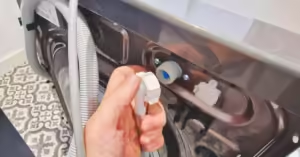
Washing machine water hose being disconnected

How to Disconnect a Washing Machine Guide

Disconnecting a washing machine is simple most of the time but can be a bit of a headache. It is easier to “unplumb” than plumb in a washing machine but it’s not always plain sailing. I have been a full-time plumber for over a decade and have fitted and disconnected many washing machines. Steps to […]

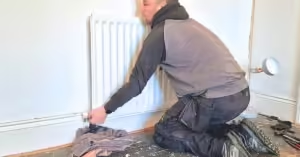
Heating engineer removing a radiator

How to Remove a Radiator Without Draining System

Removing a radiator from a wall can be very difficult. Depending on what system you have, the size of the radiator you’re removing, and the condition of the valves, it can be a 6-hour nightmare or a 10-minute walk in the park. I have been a full-time heating engineer carrying out radiator repairs and replacements

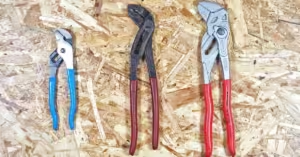
Three pairs of water pump pliers

The Best Water Pump Pliers (Plumbers Grips) on the Market

Water pump pliers, called grips by plumbers, are adjustable pliers that are much-needed and one of the best tools in every plumbers tool kit. I have been plumbing and buying plumbing tools (many more than I need) for over a decade and have had my first and best water pump pliers since day one. Here

Five of the best adjustable spanners

Best Adjustable Spanner for Plumbing: Top 3 Makes

Adjustable spanners (or adjustable wrenches) are an essential part of any plumbing tool kit. Having the best tools as a plumber will make jobs go much more smoothly. I have been a full-time plumber and buying plumbing tools for over a decade and have bought many more tools than I need. Here I’ll show you the

Worcester boiler pressure gauge low

How to Repressurise Worcester Boiler Pressure & Decrease

When your pressure drops too low, the boiler will stop working, which means no heating or hot water. The pressure should be between 1 and 1.5 bar when the radiators are cold. I have been repairing and servicing Worcester boilers for over a decade and have fixed many boiler pressure problems. Worcester boiler pressure explained Worcester boilers

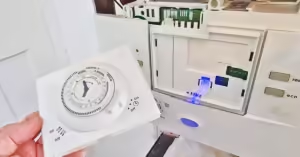
MT10 Worcester timer removed from boiler

MT10 Worcester Boiler Timer Replacement: 5 Step Guide

When your MT10 timer is broken your heating will not work. Replacing the MT10 timer (or MT10rf) on a Worcester boiler is very simple once you have removed the boiler casing. I have been carrying out boiler replacements and repairs for over ten years and replacing an MT10 timer is very basic. Here I’ll show

Repressurising a Vaillant boiler

How to Repressurise Vaillant Boiler Pressure & Decrease

When your pressure drops too low, the boiler will stop working, which means no heating or hot water. The pressure should be between 1 and 1.5 bar when the radiators are cold. I have been repairing and servicing boilers for over a decade and have fixed many boiler pressure problems. Vaillant boiler pressure explained Vaillant boilers have

Repressurising a Baxi Potterton boiler

How to Repressurise Baxi Boiler Pressure

When your pressure drops too low, the boiler will stop working, which means no heating or hot water. The pressure should be between 1 and 1.5 bar when the radiators are cold. I have been repairing and servicing boilers for over a decade and have fixed many boiler pressure problems. Baxi boiler pressure explained Baxi boilers have

Opening a boiler filling loop

What is a Boiler Filling Loop? How to Fix and Replace Guide

A boiler filling loop is needed on all pressurised central heating systems. If you have a combi boiler or system boiler you should have a filling loop. The filling loop is used to repressurise the boiler by connecting the cold water to the heating system via a flexible or solid pipe and two valves. I

How to replace a pressure relief valve

How to Replace a Pressure Relief Valve on a Combi Boiler

A pressure relief valve (PRV) is a safety device on a pressurised heating system that prevents the pressure from getting too high and becoming dangerous. When the pressure reaches 3 bar, the PRV releases the water from the system and discharges it outside. I have been repairing boilers full-time for over a decade and replacing

Scroll to Top