

By Steven Reid · Last updated on August 30th, 2026 · 7 Comments
A boiler leaking water from underneath is usually caused by a loose connection, worn seal, high pressure or a faulty internal component. Even a small drip should not be ignored because water can damage electrical parts, corrode the boiler and eventually cause it to stop working.
I have been fitting and repairing boilers full-time for over 15 years. In this guide, I’ll explain the most common causes of boiler leaks, what you can safely check yourself and when you need a Gas Safe registered engineer.
What to do when you find a leak
Switch the boiler off and allow it to cool. Place a container or towels underneath to limit water damage, but do not remove the boiler casing or touch any internal components.
Before calling an engineer:
- Check the pressure gauge
- Look for water around the visible pipes
- Take a photo or video of the leak
The place where the water drips may not be where the leak started. Water can travel through the boiler before appearing underneath.
Even a small drip can cause corrosion or damage electrical components, so arrange a professional boiler repair promptly.
Stop using the boiler if the leak becomes heavy or reaches electrical fittings.
Why is water coming from underneath the boiler?
Water underneath a boiler does not necessarily mean the leak started at the bottom. An internal component or connection higher inside the appliance may be leaking, with the water running down before dripping from the casing.
Where the water appears is not always where the leak is coming from.
Without removing the cover, check whether the water appears to be coming from the left, right or centre. It also helps to note whether the leak happens constantly, when the heating comes on or only when you use hot water.
These details can help an engineer narrow down the cause, but the exact source may remain hidden inside the boiler.
What causes a boiler to leak water?
A boiler can leak because of a fault inside the appliance or a problem with the surrounding pipes and connections.
Common causes include:
- Loose or damaged pipe connections
- Worn seals, washers or O-rings
- Corroded internal components
- A faulty pump or diverter valve
- A cracked heat exchanger
- Expansion-vessel problems
- Boiler pressure rising too high
- A leaking pressure relief valve
- A damaged condensate trap or pipe
High pressure is a common cause. If the expansion vessel is not working correctly, the pressure can rise when the heating comes on and force water through the pressure relief valve.
Some boilers also develop recurring faults. See my separate guides to Worcester boiler leaks and Baxi boiler leaks for model-specific problems.
Water leaking from a pipe underneath
Water leaking from a pipe underneath the boiler is often caused by a loose connection, damaged seal, corrosion or a faulty valve. The correct repair depends on which pipe is leaking and whether the water is coming from a joint or the pipe itself.
The type of pipe and when it leaks can help identify the problem:
- A heating flow or return pipe may leak from a compression joint, valve or corroded section.
- A mains water pipe may drip constantly, even when the boiler is switched off.
- A pressure relief pipe may leak when the boiler pressure rises too high.
- A plastic condensate pipe may leak from a damaged fitting or blockage.
- A braided filling loop may leak from one of its valves or connections.
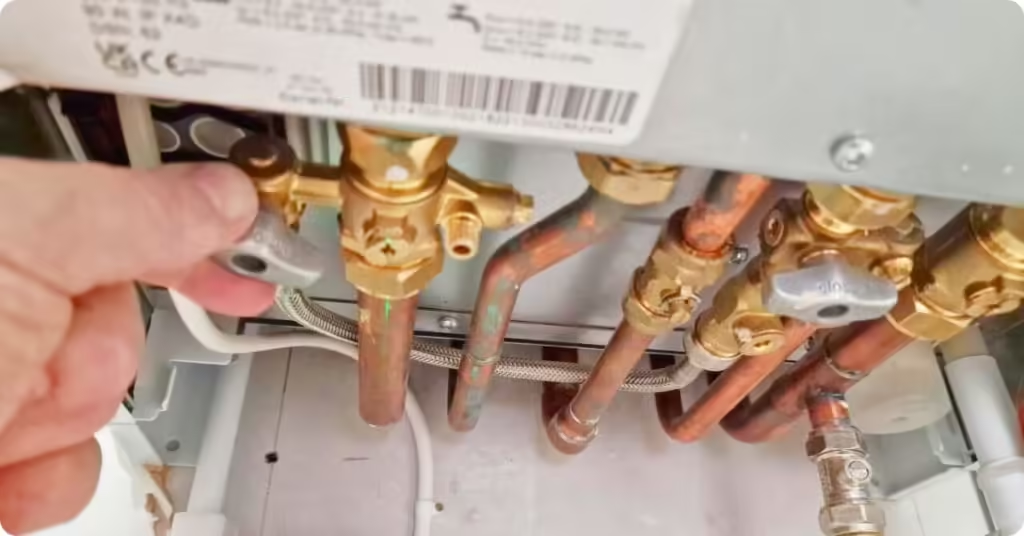
An accessible compression fitting may only need tightening or resealing, but damaged pipework and boiler components will need repairing or replacing.
If the leak is coming from the filling loop, see my guide to replacing a boiler filling loop. Do not remove the boiler casing to trace a hidden leak.
Losing pressure at the same time
A boiler loses pressure when water escapes from the sealed central heating system. The leak may be inside the boiler, on a radiator, around a valve or somewhere along the heating pipework.
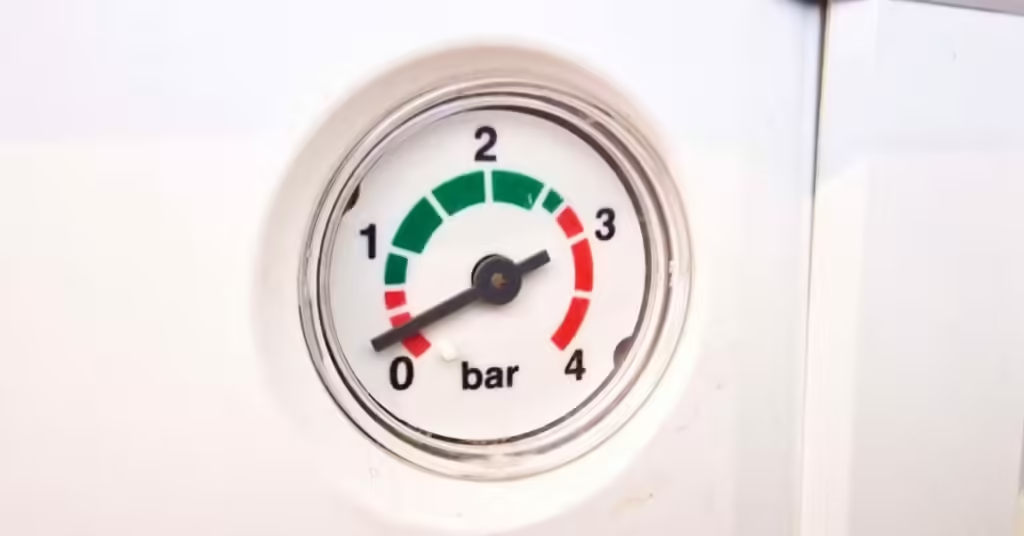
Check the pressure when the radiators are cold. It should normally be around 1 to 1.5 bar.
The way the pressure changes can help identify the problem:
- If it gradually drops without rising first, there is probably a leak somewhere on the system.
- If it rises towards 3 bar when the heating comes on and then drops, the expansion vessel may need recharging or replacing.
- If water is dripping from the pressure relief pipe outside, the pressure relief valve may be passing water.
Repeatedly repressurising the boiler adds fresh water to the system without fixing the underlying fault. This can dilute the inhibitor and increase the risk of corrosion.
See my complete guide to why a boiler keeps losing pressure for help narrowing down the cause.
Is a leaking boiler dangerous?
A small water leak does not always mean the boiler is immediately dangerous, but it should never be ignored. Water can damage electrical components, corrode internal parts and eventually cause the boiler to stop working.
A leak around the flue, combustion chamber or internal electrical components requires urgent attention. These areas are hidden behind the boiler casing and must only be inspected by a Gas Safe registered engineer.
Switch the boiler off and arrange an urgent inspection if:
- Water is reaching electrical fittings
- The leak becomes heavy or rapidly worsens
- The boiler repeatedly cuts out
- The pressure rises or falls dramatically
- The flue or surrounding wall is wet
- A carbon monoxide alarm activates
A water leak does not usually cause a gas or carbon monoxide leak by itself. However, if you smell gas or a carbon monoxide alarm sounds, leave the property and call the National Gas Emergency Service on 0800 111 999.
If you suspect the boiler is unsafe, HSE guidance recommends switching it off and not using it until it has been checked by a Gas Safe registered engineer.
Can a leaking boiler be repaired?
Most leaking boilers can be repaired once the source of the water has been identified. A minor leak may only require a new seal, a tightened connection or a replacement filling loop.
Internal faults can involve the expansion vessel, pressure relief valve, pump, diverter valve or condensate trap. These components can usually be repaired or replaced by a Gas Safe registered engineer.
The underlying cause must be fixed as well as the leaking component. For example, replacing a pressure relief valve without correcting an expansion-vessel problem could cause the new valve to start leaking too.
A badly corroded heat exchanger or several failing components can make a repair uneconomical, particularly on an older boiler. In that situation, replacing the boiler may be the better long-term option.
When replacement makes more sense
Repairing the boiler will usually make sense when it is relatively new, the fault is isolated and replacement parts are readily available. Components such as seals, valves, pumps and expansion vessels can often be replaced without needing a new boiler.
Replacement becomes worth considering when the boiler is more than 10 to 15 years old, suffers repeated leaks or has extensive internal corrosion. An expensive heat-exchanger fault can also make continued repairs difficult to justify.
Compare the repair cost with the boiler’s age, condition and likely remaining lifespan. A cheap repair on an otherwise reliable boiler is worthwhile, whereas repeatedly spending money on an unreliable appliance may not be.
If replacement is the better option, see my new boiler replacement service in Newcastle and North Tyneside for current prices, warranty information and everything included.
Frequently asked questions
Why does my boiler leak only when the heating is on?
A leak that starts when the heating comes on is often related to rising pressure or components expanding as they become hot. Check whether the pressure gauge rises towards 3 bar, as this may indicate an expansion-vessel problem.
Why does my boiler leak when I use the hot water?
A combi boiler that leaks only when a hot tap is running may have a problem with the diverter valve, plate heat exchanger or domestic hot-water pipework. The exact source will normally be hidden inside the casing.
Can a boiler leak without losing pressure?
Yes. A leak from the mains-water or hot-water side of a combi boiler may not affect the central-heating pressure. Condensate leaks can also occur without causing the pressure gauge to fall.
Can a leaking boiler cause carbon monoxide?
A water leak does not normally produce carbon monoxide. However, a leak that damages combustion components, seals or the flue could affect the boiler’s safe operation. Switch it off if a carbon monoxide alarm activates or there are problems around the flue.

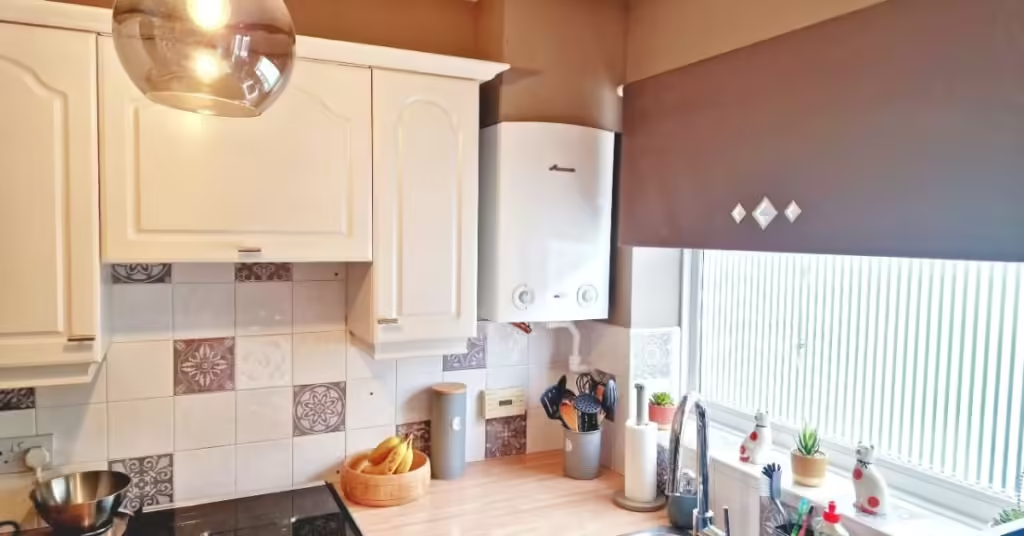
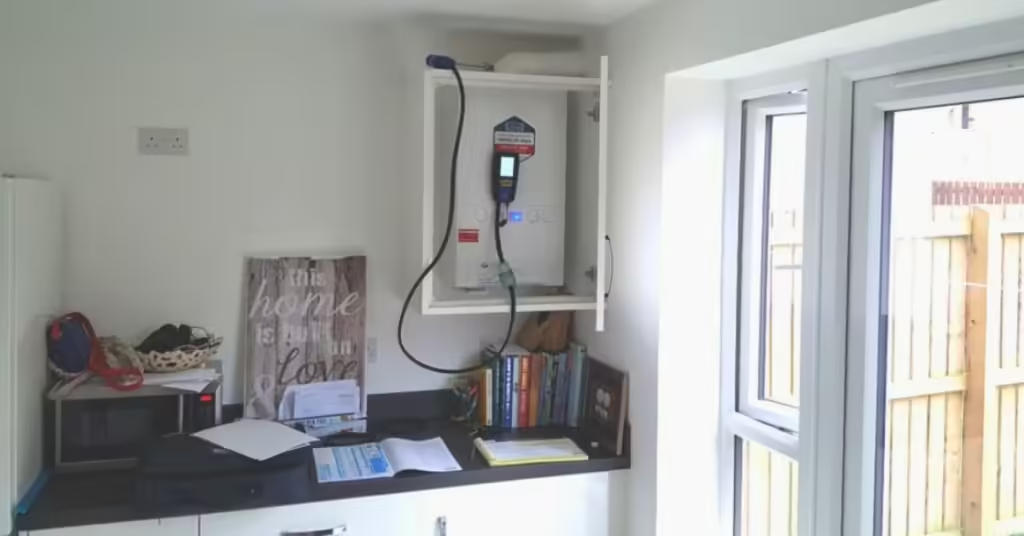
Hi there, I’ve got a Worcester combi (i think) hot water for sinks not shower, and heating, it started dripping below this eve, it seems when I returned home and started using hot water, tried heating and seemed to not leak,?…Anyideas I’ve got landlord to contact a plumber, I’ve turned boiler off! Is that right thing to go? It seems to have stopped dripping not using hot water it heating, Thank you any advice most welcome
Hi Marcus,
Sounds like you’ve got a leak on the hot water side of the combi boiler so using the heating will be fine. Just try not to use the hot water until the leak it’s fixed.
Hi Steve,
My boiler looses pressure every couple of day and shows E1 , so I fill it up to 2 bar, then when it fires up after a while it reads 3.5 bar ,
Any ideas what the problem, do I need to release the pressure or just leave it
Cheers Tom
Hi Tom,
Sounds like you have an expansion vessel problem, it will probably need to be recharged or replaced. Might need a new pressure relief valve also. You should fill the pressure to 1.5 bar, not 2 bar.
My boiler Ariston has had 4 o rings replaced and is now leaking a drip every 10 seconds it appears to be coming from the bottom left hand side, I took the cover off to see where it’s coming from
Roy 3rd May 23
Hi I have a logic combo boiler the last pipe on the right as you look at it which in this case goes into outhouse but leads to nothing it leaks where it comes in to outhouse ?
that’s the pipe from the pressure relief valve, which means there is either a problem with the expansion vessel inside the boiler, or the pressure relief valve is faulty.